You leave a meeting convinced it didn't go well. A colleague leaves the same meeting feeling encouraged. Nothing about the meeting changed. The difference wasn't the conversation. It was how each of you experienced it.
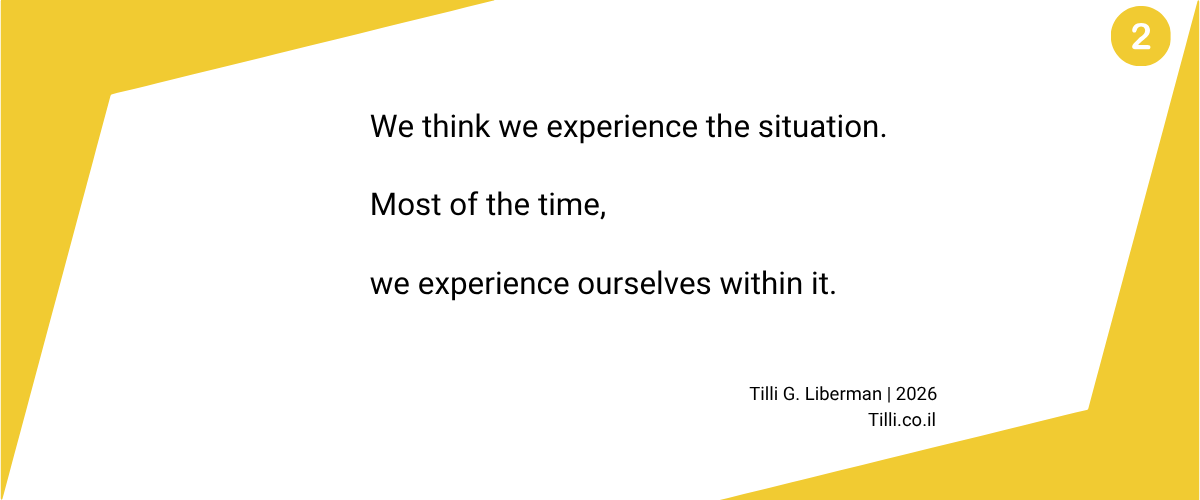
We often think we experience situations. Most of the time, we experience ourselves within them.
That's why two people can walk into the exact same meeting and leave with completely different experiences. The meeting was the same. The conversation was the same. The feedback was the same. But their experience wasn't.
We often believe our reactions are shaped by what happened. More often, they're shaped by how we experience ourselves in what happened.
A comment becomes criticism. Silence becomes rejection. Disagreement becomes proof that we're not good enough, not ready, or not influential enough.
Not because that's what happened.
But because that's how we experienced it.
Once we experience a situation that way, it quietly begins to shape everything that follows—what we feel, what we notice, what we avoid, what we say (or don't say), and even the possibilities we can no longer see.
The shift doesn't happen when someone gives us a better answer. It happens when our experience of the situation begins to change.
The situation may stay the same.
But our experience of ourselves within it can.
And when that changes, our response changes with it. So do the possibilities we begin to see.
A question worth asking:
Are you reacting to the situation… or to the way you're experiencing yourself within it?
