
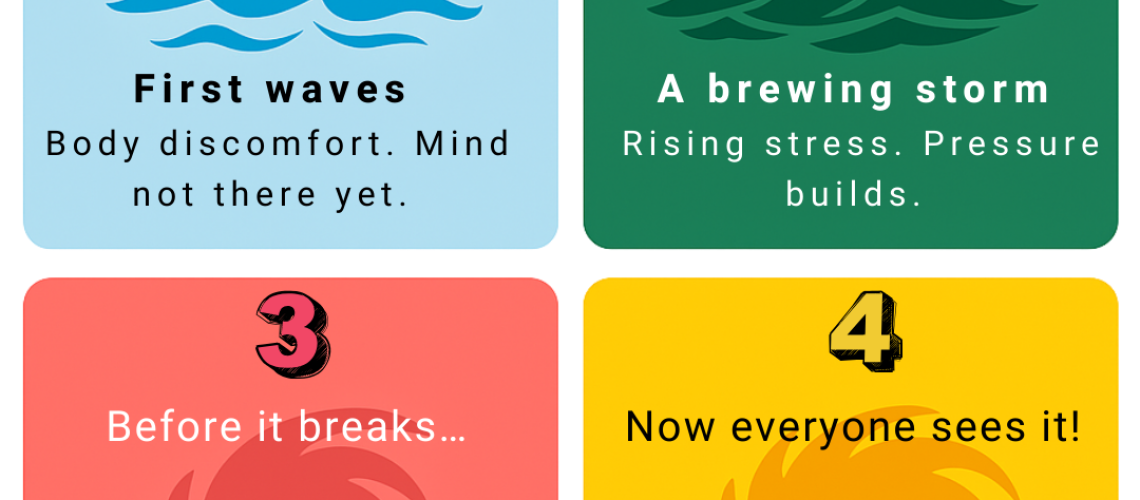
It often happens that emotion shows up before thinking, and in that moment something else starts running us. In most situations where we feel disappointed in ourselves, it’s not really about what we did, but about what happened just before.
It begins with a fast, almost unnoticed intuitive response. From the outside everything looks normal, but inside something tightens: “I wasn’t enough”, “Why did I say that?”, “What did they see in me just now?”
Under pressure, the part that shows up first isn’t the leader we aspire to be, but the vulnerable, automatic self — the one that reacts without conscious management. In busy, demanding environments, emotional autopilot quietly takes over. That’s where frustration, self-disappointment, and the thought “I could have responded differently” come from.
And that is exactly where the real work begins. Not in trying to control emotion or get rid of it, but in learning how to create space. Space where emotion is acknowledged, without being handed the steering wheel.
The work is learning to meet that moment differently. To ask how we allow emotion to be present while still choosing a response aligned with who we want to be, and how we develop the ability to choose even when pressure is high.
These aren’t theoretical questions. These moments directly shape how we communicate, manage, and lead. And they can be met differently.
